Your website used to be the go-to source for information about your business. Now, it’s lost that job — and much of its traffic — to AI-generated answers.
The key to regaining its power lies in appealing to two audiences at once: the one scraping information about your brand and the one arriving with a purchase intent to be fulfilled.
This dual role creates new opportunities to showcase what makes your brand unique. By mastering both functions, you'll capture the value your competitors are still leaving on the table.
|

|
Editor-In-Chief, CCO Magazine
|
|
|
|
|
|
|
|
|
|
|
|

|
The internet recently reached an evolutionary milestone: Bots and automated traffic outnumber human visitors on the web. Automated requests made up 61.1% of HTML web traffic in early August 2026, compared to 38.9% from humans, according to Cloudflare Radar.
This means a significant portion of your audience now encounters your website’s content through AI queries and summaries, rather than direct visits.
What does that mean for the future of brand websites? Most brands are still figuring that out, says Wil Reynolds, CEO and VP of innovation at Seer Interactive:
|
|
|
|

|
“The entire industry got reset, and no one knows exactly what they're doing — which means what gets rewarded most right now is constantly testing, admitting you don't know it all, and being willing to be wrong. It's no longer a simple formula. We're all figuring it out for the first time, and I find that extremely exciting." — Wil Reynolds, CEO and VP of innovation, Seer Interactive
|
To increase the value of your website experience — in the eyes of both bots and human buyers — here are some initial steps experts recommend.
|
Revisit how website content is structured
Brand websites now have a job that most were not originally designed to do: influencing how AI describes your company to consumers.
Ahava Leibtag, CEO of Aha Media Group, explains the practical implications: "Think of your site's content less as a set of pages built to be visited and more as a structured data layer. The same paragraph that persuades a human visitor also needs to hand a clean, extractable fact to an AI system deciding what to say about your brand."
To serve the needs of both visitors at once, Nate Holmes, director of product marketing at Acquia, suggests restructuring key pages to lead with direct answers. For example, during a recent website redesign, his team:
|
- Rewrote subheads as questions buyers ask
- Reworked body content into shorter paragraphs with definitions for complex or technical terms
- Pulled concrete proof points from PDFs and developed them as pages with standalone, quotable stats
- Inserted tables wherever options were being compared, as AI models parse them more easily than prose.
|
Taking these steps helps ensure site content will be legible to both machines and human readers and accurately reflect your brand’s value.
Invest in what your brand uniquely owns
If AI can produce competent yet generic content about your business in seconds, what's most worth publishing on your website?
The answer, according to Nate, starts with ownership.
|

|
“It’s the original research, writing style, the specific customer stories, the actual expertise that’s something you uniquely provide." — Nate Holmes, director of product marketing, Acquia
|
Jeff Coyle, head of strategy at Siteimprove, agrees, noting that AI can recombine what's already public, but it can't replicate the style and substance of a true domain expert. "Content strategy, editorial experts, and subject matter experts are the most important people in the room,” he says.
He also points to an underused source of original content: everything that happens after the sale.
|

|
“Post-purchase content — help centers, product documentation, community forums — is some of the most undervalued real estate on brand sites. It's really impacting the way your brand is being represented in AI search." — Jeff Coyle, head of strategy, Siteimprove
|
Invest in original, expert-driven content and optimize the post-purchase content you're likely overlooking. With generic information rapidly growing more commoditized, verifiable expertise remains the defensible moat that distinguishes brand value.
Rebuild your team before you rebuild your site
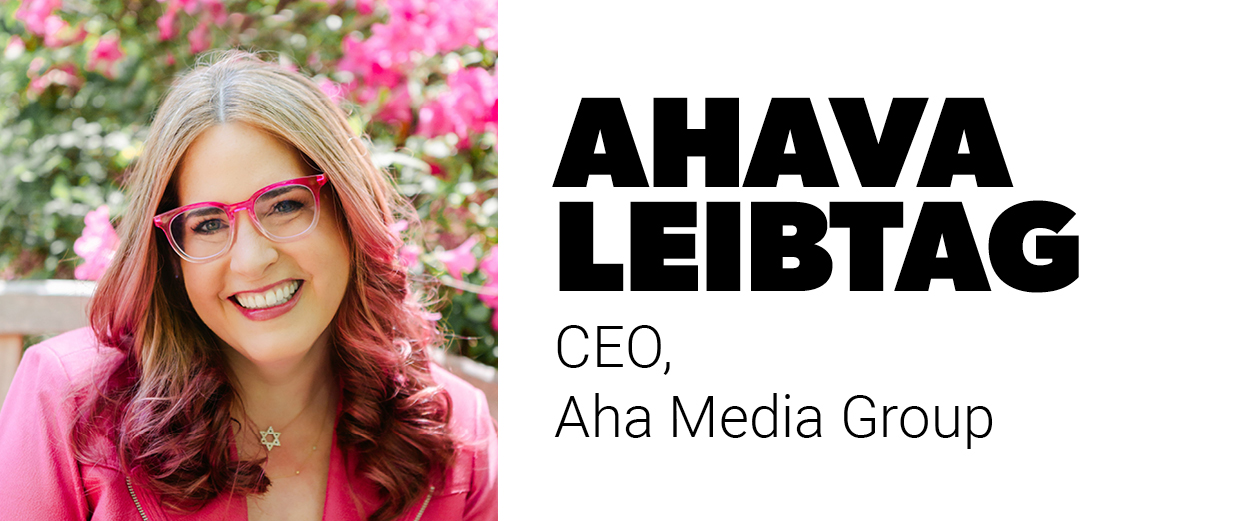
None of these strategies work without the right skills and structure supporting them. Ahava argues it's critical to rebuild your team before rebuilding website content:
|
|
“For a long time, content strategy was splintered between editorial and UX strategists and content engineers … and those fields grew further apart. Now we need to bridge that gap. Those people need to be in the room together." — Ahava Leibtag, CEO, Aha Media Group
|
Decisions about structure, tagging, and framing must be made in concert, not handed off in sequence.
Evolve your website strategy to serve its dual purpose
Cultivating a universally understandable and distinctly valuable website experience will benefit your business — no matter who (or what) chooses to explore it. Read the full article for additional changes to consider and a detailed case study of how restructuring Acquia’s website led to significant increases in brand mentions and AI citations.
|
|
|
|
|
|
|
|
Thomas Harpointner on Websites That Serve as a Source of Truth
|
|
|
|

|
Thomas Harpointner
Founder and CEO,
AIS Media, Inc.
|
Brand websites now have two jobs: training the AI systems that describe your business to consumers and converting those who arrive with their intentions already shaped by the insights AI supplied. Many marketing leaders are still optimizing for only one of these audiences — and losing ground on both fronts.
Thomas Harpointner has built his career on guiding brands through evolutionary changes like this. As founder and CEO of Atlanta-based digital marketing agency AIS Media, he's helped clients supply the website-based evidence that both AI systems and educated buyers need to make decisions.
|
|
|
|
We asked Thomas how marketers should reengineer their website experience to serve this dual purpose and what their strategy needs to account for in the process. Here’s what he shared.
The website’s role has evolved from publishing channel to source of truth
|
TH: For years, brands have viewed their websites as a publishing channel for product info pages, blogs, bios, client case studies, and so forth. And that's still largely the case. But today, it's also very important that websites are seen as a source of brand truth, supplying evidence that both customers and AI search platforms need to make effective decisions.
To build audience trust, don’t start with optimizing for AI. Start with understanding what people care about, then provide that evidence to AI systems.
For our clients, we research the types of audiences we're targeting, the topics they care about, the questions they're asking, and the keywords they're using to search for answers — on both traditional search engines and AI platforms, as well as on social media.
It's a critical step that seasoned marketers are often tempted to skip over. But without those research-based insights, marketing is really just guessing what matters to them.
If the website serves as the source of truth and conveys authority, it sends a signal to AI search engines. Then, there is a higher probability that your brand’s content will be cited when consumers ask ChatGPT for specific guidance.
Prioritize content that AI can't replicate
|
TH: If Google's going to answer all the questions anyway, and people are just going to skip going to the website, does what we publish on a website still matter?
In some cases, it matters less. AI is going to surface the answers to very basic questions. If someone wants to know the weather in Denver, they don’t need to go to the Weather Channel’s website to find out.
But if you're selling technology with a longer sales cycle, audiences are going to care about client case studies before they pull that trigger. If they narrow down their choice between two or three vendors, they may want to see videos of your products or demos on YouTube and do a deeper dive.
Client case studies and testimonials — that type of content is very unique to each brand. No one is going to copy your testimonials. AI is not going to auto-generate that type of content.
It may not be the first thing customers search for right out of the gate, but it becomes very important as a potential client gets further down their decision journey and looks for verification and subject matter expertise.
Measure success by business outcomes, not traffic
|
TH: Google rankings and site traffic were really the top performance metrics for most website content and SEO campaigns in the past. Now it feels like almost no matter what we do, our rankings and site traffic still go down. That's probably the single biggest frustration point.
But the truth is, the C-suite doesn't care that content was published. What they care about is when market perception changes or business momentum is created because of that content. The ultimate performance metric is business performance: Are we generating leads? Are those leads more qualified? Are those qualified leads converting into higher business revenue?
For example, about six months into our work with Edelman Travel, major changes in content impact started to surface, including a 120% increase in qualified leads and 216% sales pipeline growth.
Those are very impressive numbers, but numbers only tell part of the story. What really mattered was when they told us the quality of those leads was much higher. The leads were further down the decision journey. That shift in lead quality raised the sales team’s awareness of just how important authoritative website content is.
|
|
|
|
|
Related resources from the world of website content
|
As trust in brand messaging declines, earned media functions as social proof at scale. This article explains how independent validation from journalists and industry experts reduces buyer risk and drives decisions.
|
The "new tech-driven path to purchase" is forcing brands to rethink where and how they build visibility. This research report quantifies the shift — brand sites now drive just 1 to 2% of AI citations — and outlines ways to adapt your strategy around it.
|
AI and algorithms — not your team or audience — are the new gatekeepers of content discovery and engagement. Experts presenting at Content Marketing World say that’s exactly why you can’t abandon your owned media experience.
|
|
|
|
|
|
|
|
|
|
|
|

|
When your team attends Content Marketing World together, you get more from the experience. Cover more sessions, share perspectives, and leave aligned on priorities with unified strategies that deliver results.
This year, we're hosting CMWorld alongside TMRE: The Market Research Event, adding a deeper focus on insights-driven marketing. If you partner with research or insights teams, it's a great opportunity to attend together — and take advantage of group savings.
|
|
|
|
|
|
|